Alcohols, Phenols, Ethers and Carbonyl Compounds: past NEET questions with answers

23 questions from NEET 2020, 2021, 2022, 2024, 2025, 2026, newest first. Answers verified against NTA official keys.

By year in our set: 2020 (4) · 2021 (4) · 2022 (5) · 2024 (3) · 2025 (2) · 2026 (5)

Lesson: Haloform

NEET 2026

For the following reaction sequence, choose the correct option: benzene, treated with (i) CH₃COCl and AlCl₃, then (ii) NaOCl, gives P + Q.

1If P is the sodium salt of a carboxylic acid, Q is a primary alcohol.
2P and Q are aromatic compounds.
3If P gives a carboxylic acid on acidification, Q gives a poisonous gas on exposure to air and light.
4Both P and Q are carbonyl compounds.
NTA Answer: Option 3(final)

Why the other options are wrong

  • Option 1: Q is chloroform, not an alcohol. Friedel-Crafts acylation of benzene 'affords the corresponding ketone', acetophenone, a methyl ketone; sodium hypochlorite oxidises it to sodium benzoate while 'The methyl group is converted to haloform': Q = CHCl₃.
  • Option 2: Q is not aromatic. P is sodium benzoate, but Q comes from the methyl group alone: 'The methyl group is converted to haloform', here chloroform, CHCl₃.
  • Option 4: Neither product is an aldehyde or a ketone. Methyl ketones 'are oxidised by sodium hypohalite to sodium salts of corresponding carboxylic acids', so P is sodium benzoate, and Q is chloroform, which is 'slowly oxidised by air in the presence of light to an extremely poisonous gas, carbonyl chloride'.
Lesson: Addition HCN NH₃ Grignard

NEET 2026

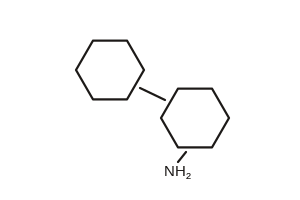
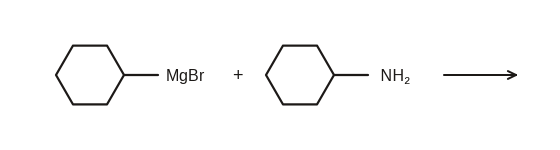
One of the products formed in the reaction shown in the figure is

Question diagram
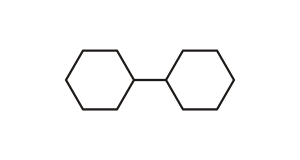
1Option 1 diagram
2Option 2 diagram
3Option 3 diagram
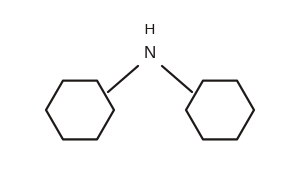
4Option 4 diagram
NTA Answer: Option 4(final)

Why the other options are wrong

  • Option 1: This secondary amine would need the Grignard reagent's ring to replace an H on nitrogen. A Grignard reagent instead takes the N–H proton: they 'react with any source of proton to give hydrocarbons', and 'Even water, alcohols, amines are sufficiently acidic to convert them to corresponding hydrocarbons'. The ring–MgBr becomes the plain ring hydrocarbon of option (4).
  • Option 2: The Grignard reagent does not join its ring to the amine's ring. The amine is acidic enough to protonate it: 'Even water, alcohols, amines are sufficiently acidic to convert them to corresponding hydrocarbons', so the ring–MgBr gives the ring hydrocarbon of option (4).
  • Option 3: Two rings joined together would be a coupling product, as when alkyl halides react with sodium in the Wurtz reaction. With an amine the Grignard reagent is simply protonated: 'Grignard reagents are highly reactive and react with any source of proton to give hydrocarbons', giving the single ring of option (4).

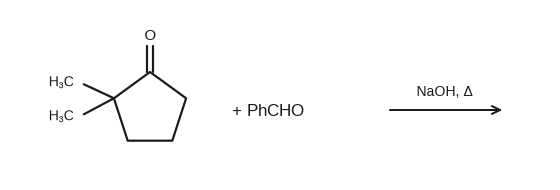
Lesson: Alpha Hydrogen Aldol

Lesson: Oxidation Reduction Carbonyl

NEET 2026

Consider the following reaction, and choose the correct option. Toluene (C₆H₅CH₃) treated with (i) CrO₂Cl₂ in CS₂ and then (ii) H₃O⁺ gives P.

1On treating compound P with saturated NaHCO₃ solution, brisk effervescence is observed.
2Compound P can be prepared by treating benzene with anhydrous AlCl₃ and CH₃COCl.
3On treatment with bromine water, compound P gives a white precipitate.
4Compound P is obtained by the hydrogenation of benzoyl chloride with Pd on BaSO₄.
NTA Answer: Option 4(final)

Why the other options are wrong

  • Option 1: Brisk effervescence with NaHCO3 is the carboxylic acid test: carboxylic acids react with carbonates and hydrogencarbonates to evolve carbon dioxide, which is used to detect the carboxyl group. P is benzaldehyde, which has no carboxyl group.
  • Option 2: Benzene treated with an acid chloride in the presence of anhydrous aluminium chloride gives the corresponding ketone (Friedel-Crafts acylation). With CH3COCl the product is a ketone, not benzaldehyde.
  • Option 3: A white precipitate with bromine water is the phenol result: when phenol is treated with bromine water, 2,4,6-tribromophenol is formed as white precipitate. P is benzaldehyde, not a phenol.

Lesson: Carbonyl Nucleophilic Addition

Lesson: Oxidation Reduction Carbonyl

NEET 2025

Identify the suitable reagent for the following conversion: methyl benzoate (C₆H₅COOCH₃) → benzaldehyde (C₆H₅CHO).

1H₂/Pd-BaSO₄
2(i) LiAlH₄, (ii) H⁺/H₂O
3(i) AlH(iBu)₂, (ii) H₂O
4(i) NaBH₄, (ii) H⁺/H₂O
NTA Answer: Option 3(final)

Why the other options are wrong

  • Option 1: H2 over palladium on barium sulphate is the Rosenmund reduction, which works on an acyl chloride (acid chloride), not on an ester.
  • Option 2: LiAlH4 is a strong reducing agent that carries the ester past the aldehyde to the alcohol (benzyl alcohol). The ester-to-aldehyde reagent is DIBAL-H: esters are also reduced to aldehydes with DIBAL-H.
  • Option 4: NaBH4 is not the reagent for this step. Esters are reduced to aldehydes with DIBAL-H, i.e. AlH(iBu)2 followed by water.

Lesson: Carboxylic Acidic Strength

NEET 2025

The correct order of decreasing acidity of the following aliphatic acids is

1HCOOH > (CH₃)₃CCOOH > (CH₃)₂CHCOOH > CH₃COOH
2(CH₃)₃CCOOH > (CH₃)₂CHCOOH > CH₃COOH > HCOOH
3CH₃COOH > (CH₃)₂CHCOOH > (CH₃)₃CCOOH > HCOOH
4HCOOH > CH₃COOH > (CH₃)₂CHCOOH > (CH₃)₃CCOOH
NTA Answer: Option 4(final)

Why the other options are wrong

  • Option 1: (CH₃)₃CCOOH has the most electron-donating alkyl groups, so it is the weakest of the four, not the second strongest: 'electron donating groups decrease the acidity by destabilising the conjugate base'. The order is HCOOH > CH₃COOH > (CH₃)₂CHCOOH > (CH₃)₃CCOOH.
  • Option 2: This is the reverse order. Alkyl groups donate electrons, so more alkyl groups mean a weaker acid; NCERT's list ends 'CH3COOH > CH3CH2COOH', and HCOOH, with no alkyl group, stands ahead of both.
  • Option 3: CH₃COOH is not stronger than HCOOH: in NCERT's order HCOOH comes well before 'C6H5CH2COOH > CH3COOH > CH3CH2COOH'. Formic acid has no electron-donating alkyl group, so it is the strongest of the four, and the bulkiest alkyl acid, (CH₃)₃CCOOH, the weakest.

Lesson: Oxidation Reduction Carbonyl

NEET 2024Revised key

Identify the correct reagents that would bring about the following transformation.

Question diagram
1(i) H₂O/H⁺ (ii) CrO₃
2(i) BH₃ (ii) H₂O₂/OH⁻ (iii) PCC
3(i) BH₃ (ii) H₂O₂/OH⁻ (iii) alk.KMnO₄ (iv) H₃O⁺
4(i) H₂O/H⁺ (ii) PCC
NTA Answer: Option 2(revised_final)

Why the other options are wrong

  • Option 1: Acid-catalysed hydration follows Markovnikov's rule ('the addition reaction takes place in accordance with Markovnikov’s rule'), putting the OH on the inner carbon and giving a secondary alcohol. CrO₃ then gives a ketone ('Secondary alcohols are oxidised to ketones'), not the terminal –CHO.
  • Option 3: Hydroboration–oxidation does give the needed primary alcohol, but KMnO₄ is a strong oxidising agent, of the kind 'used for getting carboxylic acids from alcohols directly'. The product would be the carboxylic acid, not the aldehyde.
  • Option 4: H₂O/H⁺ adds water by Markovnikov's rule, so the OH goes to the second carbon and the alcohol is secondary; PCC turns it into a ketone, not the terminal aldehyde. The primary alcohol needs hydroboration–oxidation, which adds water 'in a way opposite to the Markovnikov’s rule'.

Lesson: Aldehyde Ketone Tests

NEET 2024Revised key

Fehling’s solution ‘A’ is

1aqueous copper sulphate
2alkaline copper sulphate
3alkaline solution of sodium potassium tartrate (Rochelle’s salt)
4aqueous sodium citrate
NTA Answer: Option 1(revised_final)

Why the other options are wrong

  • Option 2: Not alkaline. Fehling solution A is aqueous copper sulphate; the alkali is in solution B.
  • Option 3: That is Fehling solution B: alkaline sodium potassium tartarate (Rochelle salt).
  • Option 4: Sodium citrate is not part of Fehling reagent. Fehling solution A is aqueous copper sulphate.

Lesson: Oxidation Reduction Carbonyl

NEET 2024Revised key

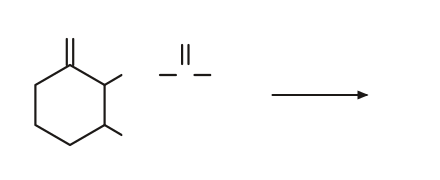
Match List I with List II. List I (Reaction) List II (Reagents/Condition) Choose the correct answer from the options given below:

Question diagram
1A-IV, B-I, C-III, D-II
2A-III, B-I, C-II, D-IV
3A-IV, B-I, C-II, D-III
4A-I, B-IV, C-II, D-III
NTA Answer: Option 3(revised_final)

Why the other options are wrong

  • Option 1: C-III and D-II swap the oxidants. 'Secondary alcohols are oxidised to ketones by chromic' anhydride, CrO₃ (C-II), while ethylbenzene to the benzoate needs 'vigorous oxidation of alkyl benzenes with chromic acid or acidic or alkaline potassium permanganate', where 'The entire side chain is oxidised to the carboxyl group' (D-III, KMnO₄/KOH, Δ).
  • Option 2: A-III and D-IV swap ozonolysis and permanganate. Cleaving the C=C of A into two cyclohexanones is 'ozonolysis of alkenes followed by reaction with zinc dust and water' (IV), and KMnO₄/KOH, Δ oxidises the ethyl side chain of D (III).
  • Option 4: A-I and B-IV swap Friedel-Crafts and ozonolysis. Benzene gives benzophenone when 'treated with acid chloride in the presence of anhydrous aluminium chloride' (I, the 'Friedel-Crafts acylation reaction'), and A is an ozonolysis (IV).

Lesson: Addition HCN NH₃ Grignard

NEET 2022

RMgX + CO₂ (dry ether) → Y (H₃O⁺) → RCOOH. What is Y in the above reaction?

1(RCOO)₂Mg
2RCOO⁻Mg⁺X
3R₃CO⁻Mg⁺X
4RCOO⁻X⁺
NTA Answer: Option 2(final)

Why the other options are wrong

  • Option 1: The salt keeps the halide: one RMgX adds to one CO2, so Y is RCOO–Mg+X, a salt of the carboxylic acid, not (RCOO)2Mg.
  • Option 3: That would need three R groups on carbon. Grignard reagents react with carbon dioxide (dry ice) to form salts of carboxylic acids, RCOO–Mg+X.
  • Option 4: The halogen is not a cation. Y is the magnesium salt RCOO–Mg+X, which gives the carboxylic acid after acidification with mineral acid.

Lesson: Phenol Acidic Nature

NEET 2022

Given below are two statements Statement I: The acidic strength of monosubstituted nitrophenol is higher than phenol because of electron withdrawing nitro group. Statement II: o-nitrophenol, m-nitrophenol and p-nitrophenol will have same acidic strength as they have one nitro group attached to the phenolic ring. In the light of the above statements, choose the most appropriate answer from the options given below:

1Statement I is incorrect but Statement II is correct.
2Both Statement I and Statement II are correct.
3Both Statement I and Statement II are incorrect.
4Statement I is correct but Statement II is incorrect.
NTA Answer: Option 4(final)

Why the other options are wrong

  • Option 1: Reversed. Statement I is correct: electron withdrawing groups such as nitro group enhance the acidic strength of phenol. Statement II is wrong: the isomers differ (pKa 7.2, 8.3 and 7.1).
  • Option 2: Statement II is wrong: o-, m- and p-nitrophenol have different pKa values in Table 7.3 (7.2, 8.3 and 7.1), so their acid strengths differ.
  • Option 3: Statement I is correct: the nitrophenols (pKa 7.1 to 8.3) are more acidic than phenol (pKa 10.0) because of the electron withdrawing nitro group. Only Statement II is wrong.

Lesson: Addition HCN NH₃ Grignard

NEET 2022

Match List-I with List-II. List – I List – II (Products formed) (Reaction of carbonyl compound with) (a) Cyanohydrin (i) NH2OH (b) Acetal (ii) RNH2 (c) Schiff's base (iii) alcohol (d) Oxime (iv) HCN Choose the correct answer from the options given below

1(a) – (iv), (b) – (iii), (c) – (ii), (d) – (i)
2(a) – (iii), (b) – (iv), (c) – (ii), (d) – (i)
3(a) – (ii), (b) – (iii), (c) – (iv), (d) – (i)
4(a) – (i), (b) – (iii), (c) – (ii), (d) – (iv)
NTA Answer: Option 1(final)

Why the other options are wrong

  • Option 2: A cyanohydrin comes from HCN, not from alcohol: 'Aldehydes and ketones react with hydrogen cyanide (HCN) to yield cyanohydrins'. The acetal comes from alcohol, a 'gem-dialkoxy compound known as acetal'. The pairs (a)–(iii) and (b)–(iv) are swapped.
  • Option 3: An amine gives a Schiff's base, not a cyanohydrin: in Table 8.2 the amine (Z = R) gives a 'Substituted imine (Schiff’s base)'. A cyanohydrin comes from HCN, so (a)–(ii) and (c)–(iv) are both wrong.
  • Option 4: Hydroxylamine gives an oxime, not a cyanohydrin (Table 8.2, Z = OH), and 'Aldehydes and ketones react with hydrogen cyanide (HCN) to yield cyanohydrins'. The pairs (a)–(i) and (d)–(iv) are swapped.

Lesson: Carbonyl Nucleophilic Addition

NEET 2022

Given below are two statements : Statement I : The boiling points of aldehydes and ketones are higher than hydrocarbons of comparable molecular masses because of weak molecular association in aldehydes and ketones due to dipole - dipole interactions. Statement II : The boiling points of aldehydes and ketones are lower than the alcohols of similar molecular masses due to the absence of H-bonding. In the light of the above statements, choose the most appropriate answer from the given below

1Statement I is incorrect but Statement II is correct
2Both Statement I and Statement II are correct
3Both Statement I and Statement II are incorrect
4Statement I is correct but Statement II is incorrect
NTA Answer: Option 2(final)

Why the other options are wrong

  • Option 1: Statement I is also correct: the higher boiling points are due to weak molecular association in aldehydes and ketones arising out of the dipole-dipole interactions.
  • Option 3: Both are correct as NCERT states them: higher than hydrocarbons due to dipole-dipole interactions, and lower than alcohols due to absence of intermolecular hydrogen bonding.
  • Option 4: Statement II is also correct: their boiling points are lower than those of alcohols of similar molecular masses due to absence of intermolecular hydrogen bonding.

Lesson: Alcohols Primary Secondary Tertiary

NEET 2022

Given below are two statements: Statement I: In Lucas test, primary, secondary and tertiary alcohols are distinguished on the basis of their reactivity with conc. HCl + ZnCl2, known as Lucas Reagent. Statement II: Primary alcohols are most reactive and immediately produce turbidity at room temperature on reaction with Lucas Reagent. In the light of the above statements, choose the most appropriate answer from the options given below:

1Statement I is incorrect but Statement II is correct
2Both Statement I and Statement II are correct
3Both Statement I and Statement II are incorrect
4Statement I is correct but Statement II is incorrect
NTA Answer: Option 4(final)

Why the other options are wrong

  • Option 1: Reversed. Statement I is correct: the difference in reactivity of three classes of alcohols with HCl distinguishes them (Lucas test). Statement II is wrong: primary alcohols do not produce turbidity at room temperature.
  • Option 2: Statement II is wrong: in case of tertiary alcohols, turbidity is produced immediately; primary alcohols do not produce turbidity at room temperature.
  • Option 3: Statement I is correct: Lucas reagent is conc. HCl and ZnCl2, and the three classes are told apart by their reactivity with it. Only Statement II is wrong.

Lesson: Addition HCN NH₃ Grignard

NEET 2021

What is the IUPAC name of the organic compound formed in the following chemical reaction? Acetone —[(i) C₂H₅MgBr, dry Ether, (ii) H₂O, H⁺]→ Product

12-methylbutan-2-ol
22-methylpropan-2-ol
3pentan-2-ol
4pentan-3-ol
NTA Answer: Option 1(final)

Why the other options are wrong

  • Option 2: That needs a methyl Grignard. With C2H5MgBr the ethyl group adds to acetone's carbonyl carbon, giving (CH3)2C(OH)C2H5, 2-methylbutan-2-ol.
  • Option 3: Pentan-2-ol is secondary and unbranched. Grignard reagents give a tertiary alcohol with ketones, and acetone keeps its two methyl groups on the carbinol carbon.
  • Option 4: Pentan-3-ol is secondary. The reaction produces tertiary alcohol with ketones, so acetone + C2H5MgBr gives 2-methylbutan-2-ol.

Lesson: Oxidation Reduction Carbonyl

Lesson: Oxidation Reduction Carbonyl

NEET 2021

The intermediate compound 'X' in the following chemical reaction is: C₆H₅–CH₃ (toluene) + CrO₂Cl₂ —[CS₂]→ X —[H₃O⁺]→ C₆H₅–CHO (benzaldehyde)

1C₆H₅–CH(Cl)H
2C₆H₅–CH(OCrOHCl₂)₂
3C₆H₅–CH(OCOCH₃)₂
4C₆H₅–CHCl₂
NTA Answer: Option 2(final)

Why the other options are wrong

  • Option 1: Chromyl chloride does not chlorinate the side chain. It oxidises methyl group to a chromium complex, which on hydrolysis gives benzaldehyde (Etard reaction).
  • Option 3: That is benzylidene diacetate, the intermediate formed on treating toluene with chromic oxide in acetic anhydride, not with chromyl chloride.
  • Option 4: That is benzal chloride, from side chain chlorination of toluene. With CrO2Cl2 the intermediate is a chromium complex.

Lesson: Oxidation Reduction Carbonyl

NEET 2021

Match List-I with List-II. List-I: (a) Benzene + CO, HCl (anhyd. AlCl₃/CuCl) → (b) R—CO—CH₃ + NaOX → (c) R—CH₂—OH + R′COOH (conc. H₂SO₄) → (d) R—CH₂COOH ((i) X₂/red P, (ii) H₂O) →. List-II: (i) Hell-Volhard-Zelinsky reaction (ii) Gattermann-Koch reaction (iii) Haloform reaction (iv) Esterification. Choose the correct answer from the options given below.

1(a) - (ii), (b) - (iii), (c) - (iv), (d) - (i)
2(a) - (iv), (b) - (i), (c) - (ii), (d) - (iii)
3(a) - (iii), (b) - (ii), (c) - (i), (d) - (iv)
4(a) - (i), (b) - (iv), (c) - (iii), (d) - (ii)
NTA Answer: Option 1(final)

Why the other options are wrong

  • Option 2: All four are shifted. CO and HCl with anhydrous AlCl3 or CuCl is Gatterman-Koch (a-ii), a methyl ketone with NaOX is the haloform reaction (b-iii), acid + alcohol with conc. H2SO4 is esterification (c-iv), and X2/red P is Hell-Volhard-Zelinsky (d-i).
  • Option 3: (a) is Gatterman-Koch: benzene treated with carbon monoxide and hydrogen chloride in the presence of anhydrous aluminium chloride or cuprous chloride gives benzaldehyde. (b) is haloform, (c) esterification and (d) Hell-Volhard-Zelinsky.
  • Option 4: (a) is Gatterman-Koch, not HVZ. Hell-Volhard-Zelinsky is (d): acids having an α-hydrogen are halogenated with chlorine or bromine in the presence of small amount of red phosphorus. (b) is haloform and (c) esterification.

Lesson: Addition HCN NH₃ Grignard

NEET 2020

Reaction between acetone and methylmagnesium chloride followed by hydrolysis will give :

1Isobutyl alcohol
2Isopropyl alcohol
3Sec. butyl alcohol
4Tert. butyl alcohol
NTA Answer: Option 4(final)

Why the other options are wrong

  • Option 1: Isobutyl alcohol (2-methylpropan-1-ol) is primary. Grignard reagents give a tertiary alcohol with ketones: CH3 adds to acetone's carbonyl carbon, giving (CH3)3C–OH.
  • Option 2: Isopropyl alcohol (propan-2-ol) has only three carbons. The Grignard CH3 group adds to acetone, so the product has four carbons and is tertiary.
  • Option 3: Sec-butyl alcohol (butan-2-ol) is secondary, the class formed from aldehydes other than methanal. A ketone such as acetone gives a tertiary alcohol, tert-butyl alcohol.

Lesson: Oxidation Reduction Carbonyl

NEET 2020

Identify compound X in the following sequence of reactions : C6H5CH3 (toluene) —[Cl2/hν]→ X —[H2O, 373 K]→ C6H5CHO (benzaldehyde)

1C6H5CCl3
2C6H5Cl
3C6H5CH2Cl
4C6H5CHCl2
NTA Answer: Option 4(final)

Why the other options are wrong

  • Option 1: C₆H₅CCl₃ has three chlorines on the side-chain carbon; on hydrolysis that carbon would become –COOH (benzoic acid), not –CHO. The page names the intermediate: 'Side chain chlorination of toluene gives benzal chloride, which on hydrolysis gives benzaldehyde', and benzal chloride is C₆H₅CHCl₂.
  • Option 2: C₆H₅Cl has lost the methyl carbon altogether, so its hydrolysis could not give a –CHO group on the ring. Cl₂ in light attacks the methyl group of toluene: 'Side chain chlorination of toluene gives benzal chloride', C₆H₅CHCl₂.
  • Option 3: C₆H₅CH₂Cl (benzyl chloride) has only one chlorine on the side chain; replacing it by OH on hydrolysis gives benzyl alcohol, C₆H₅CH₂OH, not an aldehyde. Two chlorines on the same carbon are needed, as in 'benzal chloride, which on hydrolysis gives benzaldehyde'.

Lesson: Alpha Hydrogen Aldol

NEET 2020

Reaction between benzaldehyde and acetophenone in presence of dilute NaOH is known as :

1Cross Aldol condensation
2Aldol condensation
3Cannizzaro’s reaction
4Cross Cannizzaro’s reaction
NTA Answer: Option 1(final)

Why the other options are wrong

  • Option 2: Benzaldehyde and acetophenone are two different compounds. When aldol condensation is carried out between two different aldehydes and / or ketones, it is called cross aldol condensation.
  • Option 3: Cannizzaro reaction is for aldehydes having no α-hydrogen, in the presence of concentrated alkali. Here acetophenone has α-hydrogens and dilute NaOH is used.
  • Option 4: Cross Cannizzaro would need two aldehydes without α-hydrogen and concentrated alkali. An aldehyde plus a ketone in dilute NaOH is a cross aldol condensation.

Lesson: Ethers Structure

NEET 2020

Anisole on cleavage with HI gives :

1C6H5I + C2H5OH
2C6H5OH + CH3I
3C6H5I + CH3OH
4C6H5OH + C2H5I
NTA Answer: Option 2(final)

Why the other options are wrong

  • Option 1: Anisole (methoxybenzene) has no ethyl group, and no iodobenzene forms: the attack by I– ion breaks O–CH3 bond to form CH3I, leaving phenol.
  • Option 3: Reversed. The O–CH3 bond breaks, giving CH3I and phenol; phenols do not react further to give halides.
  • Option 4: Anisole is methyl phenyl ether, so the halide formed is CH3I, not C2H5I.